
Cooling Sensations and Topical Pain Relief: What Science Actually Supports
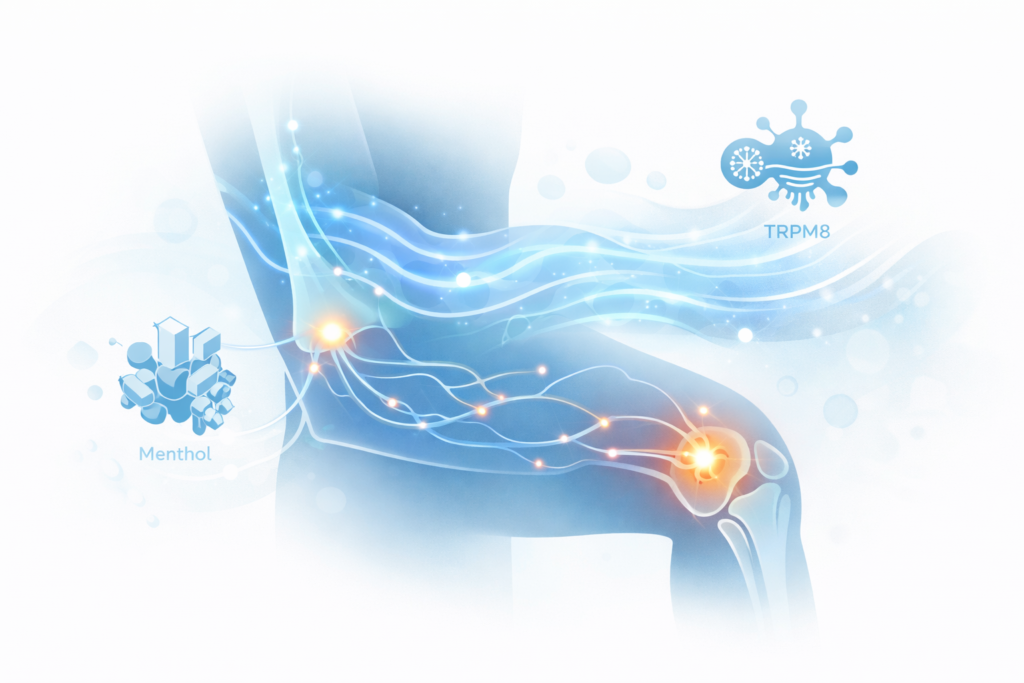
Cooling sensations are commonly associated with pain relief. From ice packs to menthol-based products, many people turn to topical approaches when experiencing muscle or joint discomfort. But while the sensation of cooling is familiar, its underlying mechanisms — and its actual benefits — are often misunderstood.
This article explores how cooling sensations interact with pain perception, what science supports regarding topical pain relief, and where these approaches fit within a broader understanding of temporary discomfort management.
Before exploring how cooling sensations influence pain perception, it is helpful to understand the biological mechanisms behind muscle and joint discomfort, including inflammation and nerve signaling.
What Are Cooling Sensations in Pain Relief?
Cooling sensations occur when certain compounds stimulate temperature-sensitive receptors in the skin. These receptors do not necessarily lower tissue temperature but instead create a perception of coolness.
This sensory effect can temporarily shift the nervous system’s focus away from discomfort, offering short-term relief without directly altering inflammation or tissue structure.
Because the sensation is perceptual rather than structural, its effects are typically temporary and context-dependent.
How Menthol and Similar Compounds Affect Pain Perception
Menthol is one of the most widely studied cooling agents. It activates TRPM8 receptors, which are responsible for detecting cold sensations on the skin.
When these receptors are stimulated, the nervous system processes competing sensory signals. This phenomenon, sometimes referred to as counter-irritation, may reduce the intensity of discomfort signals reaching the brain.
Importantly, this process does not “treat” pain at its source. Instead, it influences how pain is perceived, which explains why relief tends to be short-lived.
Topical Cooling vs. Systemic Pain Approaches
Topical products act locally, affecting surface-level nerves and tissues where they are applied. This makes them distinct from systemic approaches that circulate through the bloodstream.
Because topical cooling products are localized, they may be useful for:
- temporary muscle soreness
- joint stiffness after activity
- localized discomfort related to overuse
However, they are not designed to address underlying causes such as chronic inflammation, structural damage, or neurological conditions.
Understanding this distinction helps set realistic expectations.
What Scientific Evidence Supports Cooling-Based Relief?
Scientific literature supports the idea that cooling sensations can temporarily alter pain perception through sensory distraction and nerve modulation.
Studies suggest that topical cooling may:
- reduce perceived discomfort intensity
- provide short-term comfort
- support recovery when combined with rest or activity modification
At the same time, evidence does not support claims of long-term pain resolution or tissue repair from cooling sensations alone.
This gap between sensory relief and structural healing is often blurred in marketing language, making education especially important at this stage of consideration.
Perception vs. Treatment: Understanding the Difference
One of the most common misunderstandings around topical pain relief is the assumption that feeling better means something has been “fixed.”
In reality:
- sensation reflects nervous system input
- relief does not necessarily indicate reduced inflammation
- comfort does not equal recovery
Recognizing this difference allows individuals to evaluate topical products more critically and integrate them appropriately into broader self-care routines.
When Topical Cooling May Be Appropriate
Cooling sensations may be helpful when discomfort is:
- mild to moderate
- activity-related
- localized
- temporary in nature
They are often used alongside movement, stretching, or rest rather than as standalone solutions.
Situational use — rather than reliance — aligns more closely with what scientific evidence supports.
Key Takeaways
- Cooling sensations influence how pain is perceived, not its root cause.
- Menthol and similar compounds act through sensory nerve pathways.
- Relief is typically temporary and localized.
- Topical cooling is best viewed as a comfort strategy, not a cure.
- Understanding limitations leads to better-informed choices.
Final Thoughts — Sensory Relief Has Limits
Topical cooling approaches play a specific role in how people manage temporary discomfort. While they can offer short-term relief through sensory mechanisms, they are not designed to resolve underlying physiological issues.
Understanding what science actually supports empowers individuals to evaluate topical products realistically — appreciating their benefits without overestimating their scope.
Understanding what science actually supports empowers individuals to evaluate topical products realistically — appreciating their benefits without overestimating their scope.
For readers interested in how these principles apply to a specific topical cooling product, the following review examines one such formulation in detail, including ingredients, evidence, and limitations.
Arctic Blast Review: Does It Reallt Relieve Muscle Pain Fast?
Disclaimer
This content is for informational purposes only and does not replace professional medical advice. Topical pain relief products are not intended to diagnose, treat, cure, or prevent any medical condition. Individual responses may vary.