
Liver Detox Guide: How to Revitalize Your Metabolism Naturally and Safely
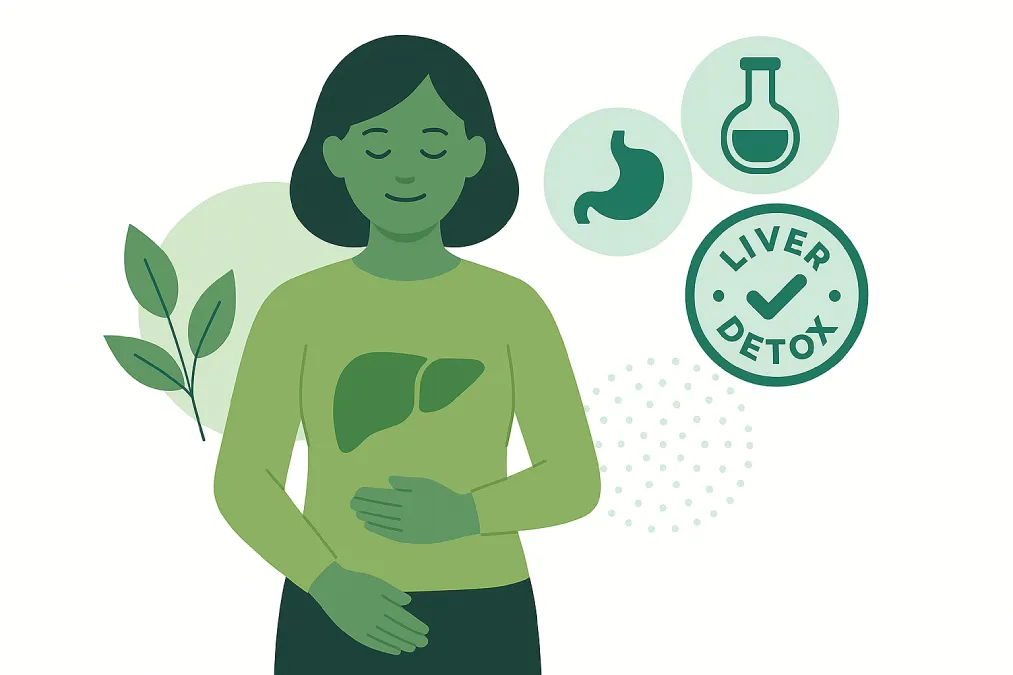
“Detox” has become a wellness buzzword, but your body already knows how to do it — every single day.
This guide explains what liver detoxification really means, how it fuels your metabolism, and what you can do to support it naturally and safely.
If you often feel constantly tired or low on energy, you might want to understand why before diving into detox.
Read our previous guide:
Constant Fatigue? Discover the Hidden Liver Link to Energy and Weight Loss
What “Detox” Really Means
Detoxification is not a weekend cleanse. It’s a continuous biochemical process where the liver converts fat-soluble compounds — like hormones, by-products, and toxins — into water-soluble forms that can be excreted through the kidneys or bile. These reactions occur in two main stages known as Phase I and Phase II detoxification.
The goal is balance, not elimination. When the liver lacks nutrients or is overloaded with alcohol, sugar, or medication, detox enzymes slow down and waste accumulates — often showing up as fatigue, bloating, or dull skin.
The Liver’s Role in Metabolism and Energy Regulation
Beyond detoxification, the liver acts as the body’s metabolic command center.
It converts carbohydrates into glycogen for energy, regulates fat metabolism, and stores key vitamins and minerals.
It also processes thyroid and steroid hormones — both critical for metabolic rate and mood stability.
How Metabolic Waste Affects Energy and Weight
When metabolic waste builds up, mitochondria — the cell’s energy producers — work less efficiently.
This means slower fat oxidation, lower ATP output, and more fatigue.
Supporting liver function helps restore this loop, keeping energy consistent throughout the day.
Common Signs Your Liver May Need Support
- Frequent tiredness or brain fog
- Slow digestion or bloating after meals
- Unexplained weight fluctuations
- Dull skin tone or dark circles
- Feeling sluggish after eating fatty foods
Natural Ways to Support Liver Detoxification
Focus on nourishment, movement, and rest — not restriction.
Nutrition
- Increase cruciferous vegetables (broccoli, kale, cabbage) — rich in glucosinolates that boost detox enzymes.
- Add beetroot and garlic — improve bile flow and sulfur metabolism.
- Use lemon and green tea — antioxidant support for Phase I reactions.
Lifestyle
- Hydration: 2–3 L water/day assists kidney excretion.
- Movement: daily walks or yoga stimulate circulation and lymph flow.
- Sleep: deep liver repair occurs between 10 p.m. – 2 a.m.
Key Nutrients & Phytocompounds
- Milk thistle (Silymarin): antioxidant that protects liver cells.
- N-acetylcysteine (NAC): precursor of glutathione, the body’s master antioxidant.
- Choline & Inositol: support fat transport and prevent hepatic fat buildup.
- Turmeric (Curcumin): reduces inflammation and promotes bile flow.
Foods That Help Your Liver Work Efficiently
| Food | Main Benefit |
|---|---|
| Garlic | Activates detox enzymes and supports immune defense. |
| Beetroot | Promotes Phase II conjugation and bile flow. |
| Turmeric | Anti-inflammatory, stimulates bile production. |
| Leafy greens | Provide chlorophyll and fiber for toxin elimination. |
| Lemon water | Hydration and mild liver stimulation. |
Liver Detox Myths vs. Facts
| Myth | Fact |
|---|---|
| “A 3-day juice cleanse resets your liver.” | The liver regenerates through consistent nutrition, not deprivation. |
| “Detox supplements remove all toxins.” | No product replaces natural detox enzymes — they only provide nutrients the body already uses. |
| “Feeling tired means toxins are leaving.” | Fatigue often signals nutrient loss or dehydration. |
Explore a Science-Based Approach to Liver Support
Curious about a research-driven formula designed around these same detox principles?
Read our detailed analysis here:
Liv Pure Review 2025 — Liver-Support Formula for Sustainable Fat-Burning
Final Thoughts — Your Liver Works Every Day. So Should You.
True detox is a daily commitment — nourishing your body, moving, resting, and staying hydrated.
By supporting your liver naturally, you encourage balanced metabolism and steady energy that lasts.